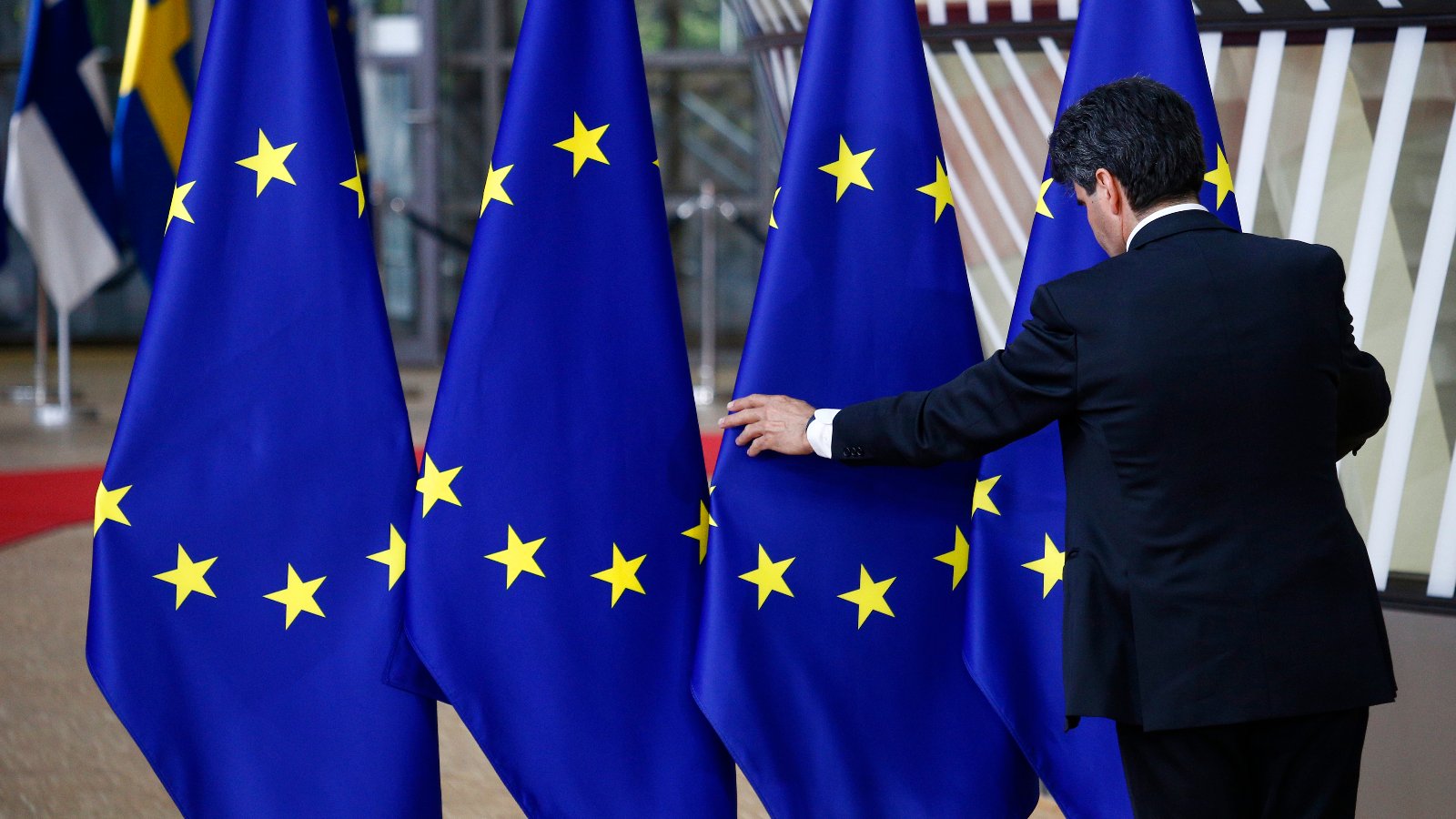
When European enlargement is debated in Paris, discussions often get bogged down in institutional caution and persistent political skepticism. French policy circles frequently point to the "Paris Doctrine", the argument that the European Union must undergo deep internal restructuring before it can consider absorbing new members.
In these debates, candidate countries are usually framed as budgetary burdens, security risks, or political wildcards. Yet, forcing a choice between "deepening" and "widening" the Union creates an artificial dilemma that unnecessarily stalls the enlargement process.
It is worth noting that the Balkans in Europe Policy Advisory Group (BiEPAG) had already addressed this issue back in 2019 by publishing a paper on ten enlargement myths. However, rather than disappearing over time, these misconceptions have only become more complex and deeply entrenched in the political discourse.
Having recently discussed these dynamics at the panel on the “Economics of EU Enlargement” in Paris (organized by the European Council on Foreign Relations, the Jacques Delors Institute, Sciences Po Alumni, Europa Experience, and DG ENEST), the reality on the ground looks very different. Montenegro poses no threat to European stability. Instead, it offers a manageable, low-risk testing ground to prove that a merit-based accession process actually works.
Here is how ten persistent enlargement myths stand up against concrete economic and political facts:
The Reality: Policymakers often cite the substantial cohesion funding required for the 2004 enlargement, but comparing Montenegro today with Poland then, or with Ukraine now, is misleading. Montenegro's integration is already factored into the EU’s Multiannual Financial Framework (MFF) for 2028–2034, where pre-accession allocations seamlessly transition into full accession funding. Integrating Montenegro under agricultural and cohesion funds would cost the average French citizen approximately €0.27 per year, a negligible financial impact on the EU budget.
The Reality: While large agricultural nations raise legitimate market concerns, Montenegro has zero industrial farming and no commercial grain production. Due to its mountainous terrain, agriculture operates on a micro-scale focused on high-value niche items: wines from indigenous grape varieties, olive oils, organic cheeses, and cured meats. Montenegro poses no competitive threat to French agribusiness, while opening niche opportunities for the transfer of European technology.
The Reality: Montenegro has unilaterally used the euro as its sole legal tender since 2002. For nearly a quarter of a century, European investors have faced zero foreign exchange risks or currency devaluation threats. Montenegro already complies with eurozone stability expectations without holding voting rights at the European Central Bank (ECB). Its banking rules align with ECB standards, making formal accession a straightforward technical transition without systemic risk.
The Reality: Fears of mass migration ignore basic demographics. Montenegro’s entire population is roughly equal to a single Parisian suburb. In fact, Montenegro experiences domestic labor shortages in tourism and construction, importing thousands of seasonal workers every year. Accession will not trigger a wave of outward migration; instead, it will establish a clear legal framework for labor mobility in green tourism and digital services.
The Reality: Integrating a small, agile country does not alter the voting math or functional capacity of the Council or the European Parliament. Montenegro’s weight is mathematically comparable to Luxembourg or Malta. Furthermore, Montenegro explicitly supports governance reforms, including Qualified Majority Voting (QMV) in specific procedural steps to prevent policy bottlenecks.
The Reality: Candidates are often perceived as vulnerable entry points for external interference. However, Montenegro has maintained a 100% alignment rate with the EU Common Foreign and Security Policy (CFSP) for years, adopting all EU sanctions regimes against Russia at a direct economic cost to its tourism sector. As a NATO member since 2017, Montenegro already sits at the same defense table as France. Leaving candidate countries in geopolitical limbo creates security vacuums; accession permanently closes them.
The Reality: Montenegro is constitutionally defined as an ecological state. Its domestic power generation relies heavily on renewables (hydro, solar, wind) with zero reliance on nuclear energy. Far from slowing down the Green Deal, Montenegro serves as an ideal pilot market for green tech investments, grid modernization, and biodiversity preservation.
The Reality: Focusing purely on budget line items ignores a vital geopolitical truth: the cost of non-enlargement far exceeds the financial investment of accession. If the EU fails to anchor its immediate neighborhood, it ultimately pays a higher price through crisis management, border instability, and external strategic interference. Montenegro’s integration offers practical opportunities across maritime logistics, infrastructure, and renewable energy.
The Reality: Judicial reforms in candidate states are often dismissed in Western capitals as procedural box-ticking. While laws alone do not transform governance culture overnight, the accession process remains the single most effective driver for dismantling corrupt networks. To address concerns about post-accession backsliding, Montenegro proactively advocates including strict safeguards and reversibility mechanisms directly in its Accession Treaty, avoiding second-class membership while ensuring institutional accountability.
The Reality: Treating internal EU reform and merit-based enlargement as mutually exclusive options serves as an excuse for permanent delay. Internal reform and accession can proceed in parallel as mutually reinforcing processes. Montenegro is the ideal case study, proving that the EU does not need a complete treaty overhaul to safely absorb a prepared state of 620,000 citizens.
Candidate states are not looking for discounts, shortcuts, or political favors; full integration requires meeting democratic standards completely. However, building robust safeguards directly into the Accession Treaty provides full assurance that a new member will not become a rule-of-law liability inside the Union.
Using internal EU reform to freeze merit-based accession damages European credibility and rewards opportunistic external actors. The Western Balkans is an integral part of the European continent, not an outer periphery. It is time to move past technocratic stalling, embrace strategic realities, and demonstrate that a merit-based enlargement model actually works.