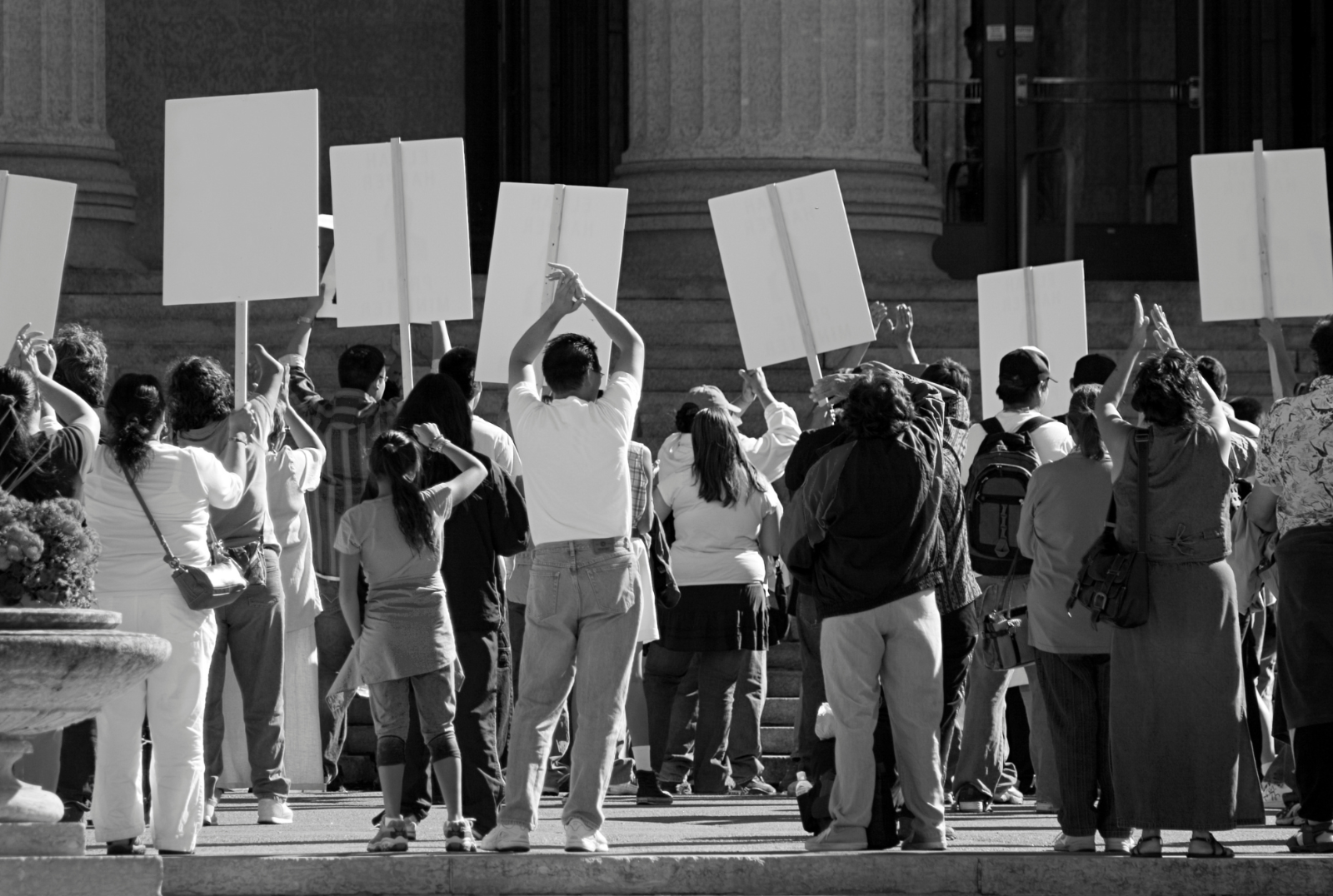
Against all odds, the protests in Albania did not disappear with the summer heat. They have continued, relentlessly, and there is no sign that they will back off in the near future. What began as a local environmental protest in mid-May in Zvërnec, southwestern Albania, over the government’s approval of a $4 billion luxury resort backed by Jared Kushner and Ivanka Trump has since evolved into an unprecedented political mobilization, surpassing in both scale and persistence even the student movement of 1991 that helped topple Albania’s communist regime.
The demands are clear: protesters are calling for a new social contract. The one that has governed the relationship between citizens and the state until now has failed. Since its inception, the movement has been about far more than opposition to a single development project or to Edi Rama’s government. At its core, the Flamingos are challenging the terms on which political authority is exercised and demanding a state whose legitimacy derives from democratic accountability and whose institutions are governed by the rule of law, not mafia.
More than three months on, the movement’s persistence raises broader questions: what sustains it, how has the government responded, what role will the EU play, and can this mobilization translate into lasting political change? These questions are essential to understanding not only what has happened so far, but also what may come next.
Summer was a crucial test for the movement, not only of its endurance in the face of sustained external pressure, but also of its capacity to confront and overcome its own internal contradictions. Its horizontal structure and diverse composition have been among its greatest strengths, allowing it to challenge the political establishment as a whole, government and opposition alike, without being co-opted by any established political force. Yet the same openness that has enabled its breadth has also made the movement vulnerable to competing agendas and ideological currents. At moments, ultranationalist and proto-fascist elements appeared to gain disproportionate influence over the narrative, shifting the focus from democratic accountability towards territorial revisionism, alongside an increasingly coercive political posture that threatened the movement’s pluralist character and, potentially, its commitment to peaceful protest.
Women’s strategic intervention in these internal tensions, including by placing their bodies at the forefront of demonstrations, was crucial to sustaining the movement. Their insistence on non-violence helped steer it back toward its original demands for democratic accountability and the rule of law, while setting clear boundaries around what the movement was, and would not, become. This ability to absorb internal conflict strengthened it, fostering greater solidarity and drawing people back into the streets.
At the same time, the steady waves of diaspora participation in the protests, combined with the government’s persistent dismissiveness and repression, further deepened the grievances driving the movement. For instance, the use of €4 million from the state budget’s emergency funds to support Kanye West’s (Ye) concert in Tirana, while Albania is among the countries hardest hit by the climate crisis, became a striking symbol of the government’s blatant arrogance and repeated abuse of power. Against the backdrop of 35 years of accumulated frustration with a failed political system, these dynamics gave the movement renewed momentum and helped transform widespread anger into more disciplined collective action.
Rama has spent 13 years in power cultivating the image of a “cool” and unconventional statesman whose eccentricity and questionable jokes have been enough to keep Brussels entertained. The performance has also served a political purpose: sustaining his legitimacy while his authoritarian tendencies have been overlooked, partly because he remains a predictable and cooperative partner on geopolitical issues. At least on paper, Rama delivers what is expected of him, and when an opportunity arises, he is rarely reluctant to strike a quick, transactional bargain, as illustrated by the migration agreement with Italy to establish detention centers for migrants on Albanian territory.
Today, however, that image has cracked. Unlike previous episodes of unrest, the current protests have attracted substantial international attention, partly because members of the Trump family are at the center of the Vjosa-Narta and Sazan Island development project. Caught off guard by the scale and persistence of the mobilization, Rama has struggled to contain it. From portraying the movement as externally orchestrated, to offering rejected bonuses and ultimately resorting to force, his increasingly desperate attempts to quell the protests have exposed the limits of his usual tactics.
Throughout the summer, police have arrested and detained hundreds in cases recently deemed unlawful by the Tirana Court. Moreover, regime-affiliated individuals dressed as civilians have attacked protesters, while police have resorted to unprovoked violence against peaceful demonstrators, including tear gas and water cannons. At the same time, the government has intensified pressure on the few objective media outlets reporting on the protests, as well as on activists and grassroots opposition parties, shutting down hundreds of their social media accounts in early September. Far from restoring control, this increasingly repressive response has exposed precisely the authoritarian tendencies that Rama’s international image once helped conceal—and, in doing so, has brought more people into the streets, determined to resist.
The EU’s role in the Flamingo protests has exposed a deeper contradiction at the heart of the accession process: Brussels can demand democratic and environmental compliance, but its leverage ultimately depends on its willingness to confront a government it otherwise regards as a reliable partner. Marta Kos’ initial response illustrated precisely this dilemma: by accepting the Albanian government’s assurances that it would comply with its obligations under the acquis, rather than publicly challenging its conduct, the Commission risked turning conditionality into little more than a bureaucratic exercise.
It was the European Parliament’s intervention on 17 June which shifted the terms of the debate by insisting that the rule of law and EU environmental standards are not negotiable. Yet the subsequent dispute over the Law on Protected Areas has exposed the limits of that pressure. Rather than repealing the controversial 2024 amendments, which opened the door to interventions in protected areas and whose review has been demanded by both protesters and the European Parliament, Tirana has sought to recast them as technical alignment with the EU acquis, effectively assessing whether formal legal convergence can substitute for substantive compliance.
The Commission’s rejection of the first draft is therefore significant, but the larger issue remains unresolved: will the EU use accession conditionality to constrain executive power, or will geopolitical pragmatism continue to prevail over democratic accountability? For the Flamingos, this is not an abstract institutional question, but a measure of whether Europe’s commitment to rule of law conditionality has any meaningful force once it reaches Albania.
The Flamingo movement has demonstrated that Albania’s democratic opposition does not necessarily have to begin in parliament. Yet mobilization alone cannot sustain a political project indefinitely. Its greatest challenge now is translating street-level political maturity into institutional and electoral capacity. Although the movement’s diverse currents have contained internal tensions and maintained a democratic front, they remain far from ready to cooperate electorally and build a coalition capable of seriously challenging Rama at the ballot box.
The more viable path may therefore lie with the grassroots parties that entered parliament in 2025: using the movement’s momentum to expand their constituencies and build a credible democratic opposition without waiting to prematurely convert the Flamingos into a party. Yet this transition also exposes the EU’s responsibility: if Brussels is serious about its accession criteria, it must move beyond treating Rama as its sole political interlocutor and apply conditionality consistently. Supporting emerging democratic forces and civil society is precisely the test of whether EU integration can strengthen pluralism and accountability rather than inadvertently entrench Albania’s existing concentration of power.