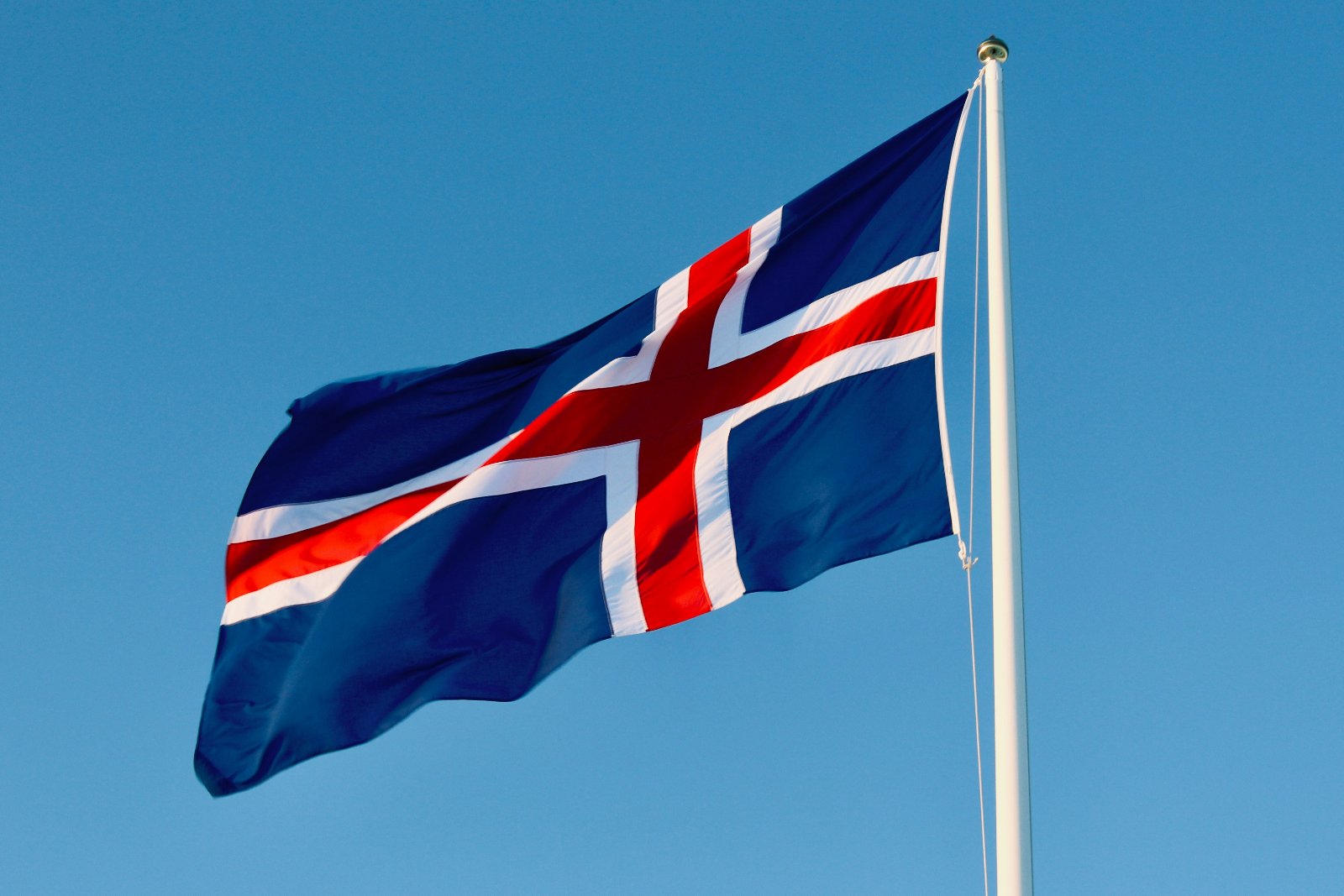
On 29 August, 52.8 per cent of Icelandic voters rejected the proposal to reopen negotiations to join the European Union. It would be easy to read this as another entry in the long ledger of European scepticism, just as right-wing sovereigntists are doing. It is more important to read it as a question about the European Union as a political project itself.
Iceland is already deeply integrated into the European system. Through the European Economic Area it has access to the single market. Through Schengen, it has free movement. As a founding NATO member, it sits inside the same wider European security architecture. So, the referendum forces an uncomfortable question. If a country can be this integrated into Europe without belonging to the European Union, what political meaning is membership left with?
The answer used to be clearer. The EU was not conceived merely as a mechanism for economic integration. It was a political project, built on the belief that states could exercise more power collectively than they ever could alone. Pooling sovereignty was not the point. Transforming how sovereignty was exercised was the point. The single market, free movement and common institutions were instruments in service of that larger ambition, not the ambition itself.
Iceland is not choosing isolation. It is not rejecting European integration. It is choosing to remain inside a large part of the European architecture while declining the final step toward full political membership, and in doing so it exposes something the EU may prefer not to examine too closely. The European Union, as a distinct political proposition, may not be as attractive as Europe itself.
This distinction matters because the EU has become remarkably good at building nuances of membership. Countries can join the single market, enter Schengen, participate in EU programmes and align with EU rules without ever becoming full members. This flexibility is, in many respects, a genuine achievement of European statecraft. But the more the Union resembles a menu of economic, regulatory and institutional arrangements that can be selected individually, the harder it becomes to say what full membership adds beyond the sum of those parts.
The original European bargain was an exchange. States pooled sovereignty in return for greater collective power, and that exchange only made sense if there was a political project on the other side of it. If the EU is primarily a single market, a country can reasonably ask how much sovereignty it actually needs to surrender to reach it. If it is primarily a regulatory system, a country can ask whether alignment is enough without membership. If it is primarily a source of funding, a country can ask whether the money can be found elsewhere. But if the EU is a political project, the calculation changes entirely, because membership then means holding a seat in the collective exercise of power rather than simply drawing benefits from it.
Integration Without a Political Core
That political proposition has become strikingly difficult to articulate, and the timing could hardly be worse. The EU currently wants to widen and deepen at once. It wants to enlarge toward the Western Balkans while also building a stronger geopolitical role and greater strategic capacity in a world of sharpening competition. But deepening cannot simply mean adding new areas of EU competence, and widening cannot simply mean plugging more countries into an increasingly elaborate regulatory system. If the Union wants to deepen, it needs a political idea of what Europeans are becoming together. If it wants to widen, it needs to be able to explain, in political rather than technical terms, what new members are actually joining.
This is why the referendum result deserves attention well beyond Iceland. It shows a mature, wealthy, secure democracy concluding that near-total integration is preferable to the political commitment of membership. It is arguably a vote of confidence in the EU's own flexibility, its ability to offer nearly everything without asking a country to join a collective political project it does not particularly want to join. And that should trouble Brussels more than a straightforward Eurosceptic revolt would, because it suggests the Union has become extraordinarily effective at making itself accessible while becoming less able to explain why accession, rather than access, should still matter.
The deeper question, then, is not whether Europe remains attractive. Iceland's vote suggests it plainly does, since a country can choose to remain this closely tied to it without joining at all. The question is whether the European Union can still articulate a political reason to join rather than simply to align, and what that answer means once it is tested against the very different case of countries that still see full membership, not proximity to it, as their destination.
That case is the Western Balkans, where the gradual integration process and the accession treaty now being drafted for the next generation of member states, starting with Montenegro as the frontrunner, will put this same question to a very different test.
The Mirage of the “Mini-Regatta”: Political Convenience vs. Merit-Based Accession
Iceland’s brief reappearance on the enlargement horizon was largely circumstantial, yet it instantly triggered convenient geopolitical narratives. Analysts and policymakers quickly framed the prospect of a joint entry with Iceland as an ideal scenario, a way to balance the accession of a Western Balkan candidate with a wealthy, consolidated democracy.
However, this argument misses a far more troubling reality. The sudden enthusiasm for a "mini-regatta" was not rooted in strategic foresight, but in political expediency within key EU capitals. As became evident in discussions we had in Paris earlier this year, it harbors a clear structural preference: it is politically easier to sell a package to domestic parliaments and public opinion during national ratifications than it is to defend the standalone accession of a single country.
Pairing candidates, whether combining Montenegro with a prosperous Nordic state like Iceland or waiting to group it with other regional candidates, completely invalidates the core promise of the process: the merit-based principle. If accession is truly based on individual achievements, then a candidate state that fulfills all legal, institutional, and democratic criteria must be allowed to cross the finish line on its own merits. Making one country’s accession contingent on the readiness, referendums, or political appetites of another turns the ratification process into a moving target.
The EU as a Passive Bystander and the Normalization Deficit
Throughout the Icelandic referendum process, Brussels functioned largely as a passive bystander, watching from the sidelines rather than actively making the case for its own political project. This reflects a deeper, systemic issue: the integration of new member states has not been normalized within the majority of EU capitals.
Instead of treating enlargement as a core geopolitical investment in Europe's collective future, many member states continue to view it through a lens of risk aversion and domestic voter anxiety. When the EU acts merely as an observer of its own enlargement dynamics, it cedes the narrative to sovereigntists and right-wing populists who frame membership as a loss rather than a mutual gain.
The Trap of "Partial Integration": Economic Ties Are Not Enough
The dangerous takeaway from the Icelandic vote would be to conclude that candidate states should simply be offered "staged economic integration" or access to the single market without full political membership.
Iceland could afford to choose access over accession because it was already a rich, consolidated democracy operating within the EEA and Schengen. For the Western Balkans, however, economic alignment without political rights, voting power, and full institutional integration is a dead end. Offering candidate countries "EU Light" status would only entrench secondary status, leaving fragile democracies vulnerable to external autocratic influences.
Furthermore, there is a stark contrast in public engagement between the two ends of Europe. While Iceland chose to remain outside, Montenegro has consistently demonstrated overwhelming public support for full EU membership - frequently exceeding 70%. Euro-enthusiasm in candidate states is not an inexhaustible resource. It cannot be taken for granted.
Accession Treaties and Montenegro as the Ultimate Litmus Test
This is precisely why the drafting of upcoming Accession Treaties, starting with Montenegro as the frontrunner, will define the future of enlargement. Accession treaties must be designed as dynamic development and enforcement tools. By incorporating robust, incentive-aligned safeguards, automatic reversibility mechanisms for rule-of-law backsliding, and clear benchmarks that link compliance directly to structural and financial benefits, these treaties can drive real-time democratic transformation while preventing the creation of second-tier membership.
This brings the entire enlargement strategy to its crucial crossroads. Montenegro now stands as the ultimate test case for the credibility of the EU's merit-based principle. If Montenegro delivers on all rigorous requirements, particularly across Chapters 23 and 24, and the EU subsequently fails to deliver a clear, unencumbered pathway to full political integration, the entire policy for the region will collapse. Montenegro must be allowed to serve as the proof-of-concept for the rest of the Western Balkans, proving that deep political commitment backed by genuine reform remains the only viable destination.