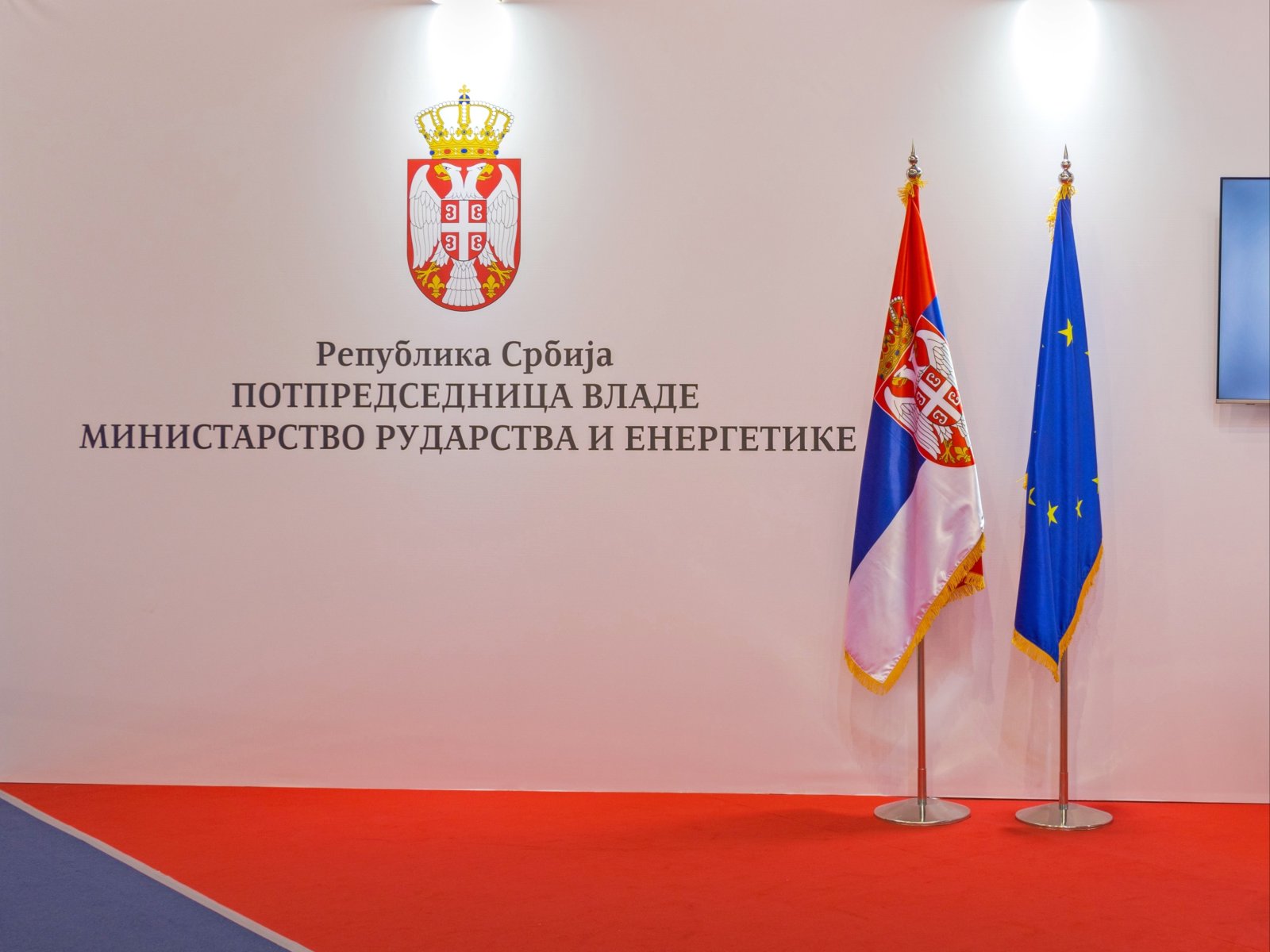
The European Commission recently released payments to Albania, Montenegro and North Macedonia under the EU’s Growth Plan for the Western Balkans, while the final assessment of Serbia’s progress is still pending. For months, Brussels has been signalling that Serbia’s access to funding under the Growth Plan for the Western Balkans could be suspended. Warnings have intensified following the adoption of controversial judicial laws criticised by both the Venice Commission and EU officials. Citing concerns over judicial independence and prosecutorial autonomy being undermined, the European Commission froze the payments under the Reform and Growth Facility, assessing that Serbia had failed to meet the necessary rule of law standards.
In the meantime, the first independent civil society monitoring report on Serbia’s Reform Agenda finds that only 6 out of 34 reform steps due by the end of 2025 had been implemented by March 2026, raising serious concerns over democratic backsliding, rule of law and media freedom.
However, despite the increasingly sharp rhetoric and announcements that the funds might be officially suspended, the EU has yet to make a final decision.
This decision could mark a critical moment both for the EU and for the regime in Serbia. Since November 2024, the government has faced the largest wave of protests in years, marked by historic levels of mobilisation around demands for accountability, institutional independence, and the rule of law. While the lack of institutional response led to the demands for early parliamentary elections, the authorities intensified pressure on critical voices, targeting universities, students, and members of the academic community alongside civil society actors and independent media.
Despite these developments, the EU failed to provide a timely, decisive and coherent response, with European Parliament being most vocal in condemning excessive use of violence and increasing political pressures. In its resolution on Serbia, adopted one year after the tragedy in Novi Sad which revealed major irregularities and corruption, the European Parliament called for a more coherent EU approach to Serbia’s democratic backsliding and invited the Commission to initiate targeted sanctions against individuals responsible for serious violations of law and human rights. Following the resolution, an ad hoc mission visited Serbia in January 2026, reporting concerns about pressure on academic staff, restrictions on media freedom and judicial reforms. In its resolution on the EU enlargement strategy, the European Parliament openly stated that Serbia’s EU accession process has effectively come to a standstill.
Rather than individual sanctions, there have been numerous warnings that the EU funds for Serbia could be suspended. In an exchange within the Committee on Foreign Affairs held in April, Commissioner for Enlargement Marta Kos stated that the Commission is assessing whether Serbia “still fulfils the conditions for payments under the EU financial instruments”. As announced, any payment will be conditional on alignment of the judicial laws with the Venice Commission’s recommendations and media independence.
Although no progress has yet been made, President Vučić had a chance to discuss the Growth Plan for the Western Balkans over a recent phone conversation with European Commission President Ursula von der Leyen. The phone call was followed by public reaffirmation of Serbia’s commitment to reform implementation via President Vučić’s Instagram, and reiteration of President von der Leyen’s support for Serbia’s EU accession process, leaving the question of how the Growth Plan fits into that equation.
In November 2023, the European Commission adopted the Growth Plan for the Western Balkans, an initiative aimed at accelerating the region’s path toward European Union membership through deeper economic, infrastructure, and sectoral integration prior to formal accession. The implementation of the Plan is envisioned through a new Reform and Growth Facility for the Western Balkans, which provides a financial package worth €6 billion.
The mechanism is intended to be conditional on implementation of the set of reforms defined by the candidate countries through Reform Agendas, placing particular emphasis on fundamental reforms. However, the undermining of democratic mechanisms began from the very outset, as the drafting process for Serbia’s Reform Agenda failed to ensure an effective consultation process, contrary to the EU regulation establishing the Reform and Growth Facility.
The preparation and adoption of Serbia’s Reform Agenda was accompanied by serious deficiencies in transparency and stakeholder participation. The role of civil society was completely sidelined, with only a limited number of organisations included in a closed-door consultation on an already finalised draft. Stakeholder participation remained largely symbolic, failing to ensure inclusive and meaningful exchange. As a result, the adopted document lacks sufficient clarity and ambition in key reform areas.
However, it is worth noting that the process of Reform Agenda development and adoption unfolded during the summer and autumn of 2024, amid growing political polarisation, mass environmental protests against lithium mining in the Jadar valley, and intensifying pressure on civil society. During this period, civil society organisations, activists, and independent media were increasingly exposed to smear campaigns and targeting by government officials and pro-regime media, developments that were also noted by the European Commission.
Nevertheless, Serbia’s Reform Agenda was officially approved. In its decision approving the Reform Agenda, the European Commission acknowledged that the “non-state actors have been informed about the main aspects of the Reform Agenda“, thus legitimising the reform process despite the obvious lack of inclusiveness and transparency.
Ultimately, the debate over whether Serbia will receive funding under the EU Growth Plan goes far beyond a question of reform compliance. It reflects a broader structural problem within the EU’s conditionality mechanisms, particularly visible in non-democratic contexts. Scholars have argued that the EU mechanisms in such contexts might produce unintended political effects, including capturing financial resources, strengthening the political position of the regime, and providing them with symbolic legitimacy through continued external support.
As the announcements that the funds might be cut come amid a major political crisis in Serbia, a timely phone call about the Growth Plan implementation provides an opportunity for President Vučić to send a public message that everything is under control.
This is not the first such instance. Only a few days after the historic protest in Serbia, organised on March 15, 2025, had been disrupted by the use of an illegal sonic weapon, Commissioner Kos reported having had a constructive meeting with President Vučić regarding the implementation of the Growth Plan. Her statement at the time was met with public criticism in Serbia, reminding the Commissioner that this issue does not fall within the President’s jurisdiction.
By meeting with the President in disregard of formal competencies, EU officials legitimise a process that undermines institutional accountability and public participation, paving the way for reform capture. In “the eleventh hour for EU fundamentals”, the decision regarding the funds from the Growth Plan could be seen as a turning point for the EU’s approach. However, it may be the “geopolitical logic” of enlargement that is making the Commission think twice before potentially suspending the funds, at a time when strategic alignment appears to matter more than fundamental reforms.
While the EU patiently waits to “open the box” and assess whether judicial and media reforms have been implemented, this case serves as a reminder that a reform process without inclusive decision-making, meaningful parliamentary debate or civil society oversight is unlikely to be sustainable in the long run.