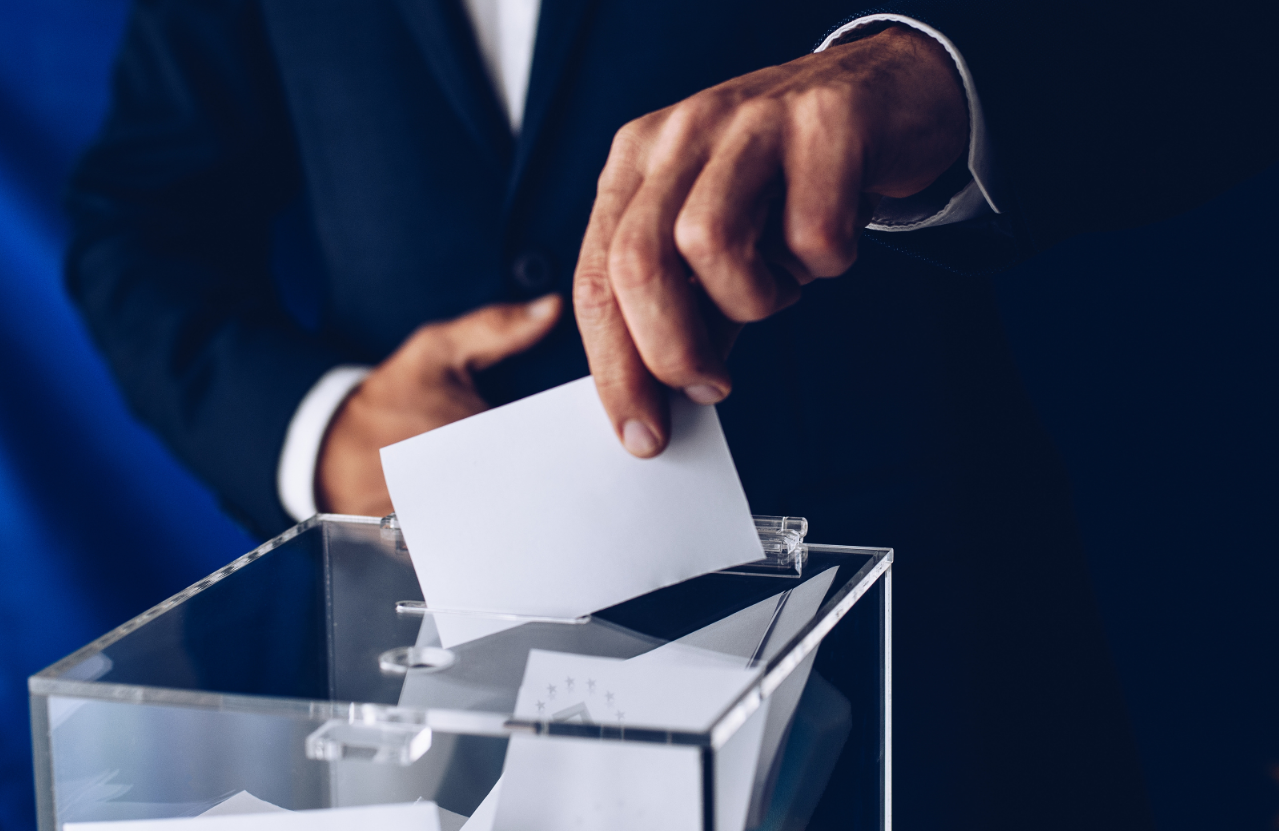
Serbian President Aleksandar Vučić called early parliamentary elections for October 25, 2026. The EU needs to do far more to ensure that the upcoming elections are conducted in accordance with the democratic standards it claims to uphold.
Since November 2024 tragedy in which the railway station canopy had collapsed killing sixteen people, student-led protests have called for Vučić to step down, accusing his government of corruption and authoritarianism. What began as calls for a transparent investigation has since evolved into demands for snap elections.
Two years since, Vučić cited several reasons for calling early elections, including alleged foreign threats and concerns that Serbia’s hosting of the 2027 EXPO could be jeopardized. However, the snap elections were ultimately prompted primarily by sustained pressure from the student-led protests, and his own understanding that his electoral prospects may never more improve as initially anticipated.
Hence, the upcoming elections represent the first credible challenge to Vučić’s twelve-year authoritarian rule since he came to power in 2012. His main opponent is an entirely new and unexpected political force—the Student List, formed by the students who have led a movement that has grown into a nationwide citizens’ protest. Their sustained mobilization has transformed the elections into a de facto referendum on Vučić’s rule, with voters increasingly being asked to choose between preserving the existing political order and demanding fundamental change. Although several independent opinion polls in recent months have indicated an electoral advantage for the Student List over the bloc led by Vučić, it remains uncertain whether election night will produce a clear winner or plunge Serbia into a difficult period of political uncertainty and potential violence, particularly if either side challenges the election results.
What is clear, however, is that these elections are unlikely to be conducted according to genuine democratic standards and will remain vulnerable to manipulation by the ruling party.
While announcing the elections, Vučić sought to dismiss such accusations. Yet, as has so often been the case over the past twelve years, he appeared to be speaking largely to himself, offering little convincing explanation of how his government’s conduct can be reconciled with democratic standards in the face of allegations and video evidence that hooded individuals have assaulted students and citizens, that voters have been pressured with promises of social benefits and shorter medical waiting times in exchange for votes, and that employees of public enterprises have been compelled to attend events or travel to locations at the direction of the authorities.
Indeed, the electoral process starts against a backdrop of state institutions that remain unprepared or unwilling to implement the legal framework impartially and responsibly. The elections will take place amid what appears to be a profound breakdown of state oversight mechanisms, the alleged abuse of the police and security apparatus, unauthorized surveillance of opposition figures and civil society activists, and the exploitation of socially vulnerable citizens.
On a daily basis, my colleagues at Serbian universities report being intimidated by police officers and summoned to police stations to provide testimony about unspecified events dating back to 2025. Their apartments are reportedly being invaded and broken into and their phones monitored. Meanwhile, opposition supporters have been assaulted on the streets by groups of hooligans, with the police accused of standing by and turning a blind eye.
According to the NGO CRTA, significant resources are being deployed to secure near-total control over the media ahead of the elections, further undermining the conditions for a genuinely free and fair electoral contest. As an illustration, Serbia’s public broadcaster RTS devoted 96 percent of its political airtime to representatives of the ruling majority. President Vučić alone accounted for half of that coverage, making him by far the most prominent political figure on the programme. Even more strikingly, positive coverage of Vučić was eleven times greater than in 2022.
As seen in previous elections, Government officials, at state-sponsored gatherings, openly call on citizens to vote for a ruling party. This points to the misuse of public resources and official positions for partisan purposes. Particularly worrisome are claims of suspected attempts at manipulation through the illegal registration of voters abroad, particularly in Republika Srpska.
As evidence of what appears to be a major electoral manipulation continues to mount, the question is whether Serbian students and citizens can confront Vučić’s entrenched and increasingly authoritarian system on their own. They should not have to. Given Serbia’s status as an EU candidate country—and the EU’s own stated commitment to democratic values and the rule of law—it is imperative that Brussels engage far more actively and take a clear stand in defence of democratic standards.
First, as already stated in BiEPAG’s open letter to the President of the European Commission, Ursula von der Leyen, she and other EU heads of state and government should refrain from visiting Serbia during the election campaign. In Serbia’s deeply polarised political and media environment, visits by prominent European leaders risk being instrumentalised as a signal of international support for the incumbent authorities.
Second, the EU should consider deploying an electoral observation mission to Serbia immediately, allowing it to be prepared to act should the results be contested. As numerous expert reports from previous electoral cycles have documented, electoral manipulation often takes place long before election day, rather than at the polling stations themselves. Early observation is therefore essential if the EU is serious about safeguarding the integrity of the electoral process.
Finally, the EU should call a spade a spade. In recent days, many European politicians have expressed shock and outrage at the glorification of war criminals, genocide denial and historical revisionism surrounding the funeral of Ratko Mladić, the convicted war criminal. Perhaps it is time for Brussels to start looking for a different and more credible partner in Belgrade.
For years, the EU has chosen to turn a blind eye to Vučić’s increasingly undemocratic practices in exchange for cooperation on issues such as curbing irregular migration along the Balkan route and securing access to critical raw materials from the Jadar Valley. But those calculations can no longer justify ignoring the democratic deterioration in Serbia.
Unless, of course, the EU’s real interest is elsewhere: in the highly skilled workforce represented by Serbia’s university students, many of whom may ultimately leave the country if this last opportunity to restore political normalcy and democracy is lost.